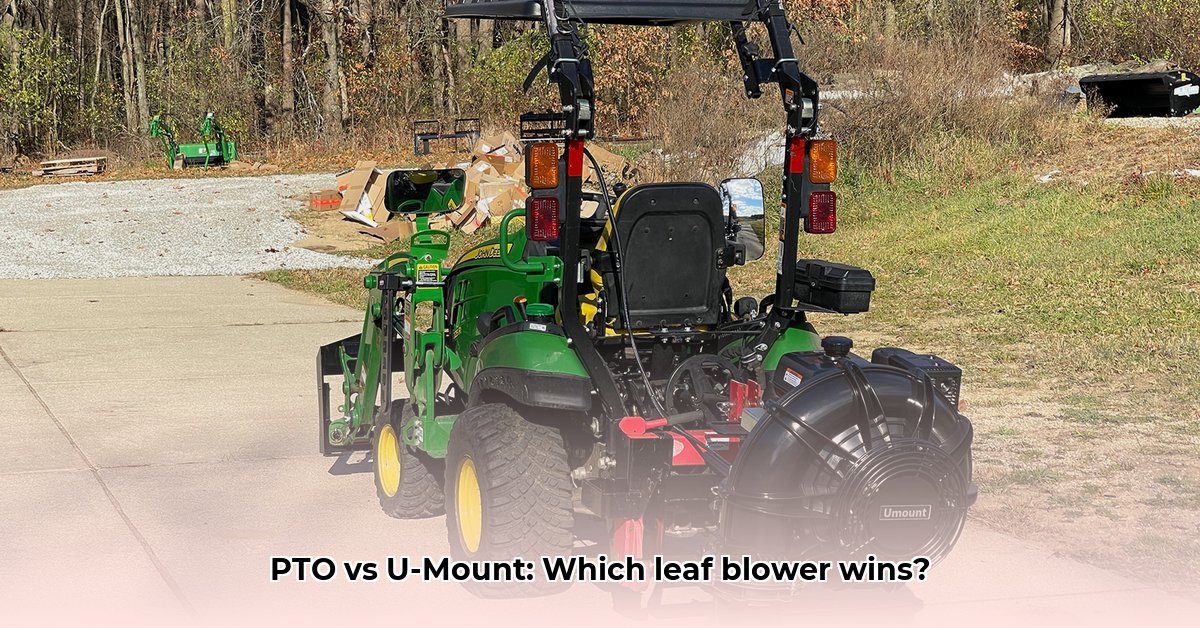
Choosing the right tractor-mounted leaf blower significantly impacts cleanup efficiency. This comparative review analyzes two popular systems: Cyclone PTO and U-Mount, highlighting their strengths and weaknesses to guide your decision.
Tractor Mounted Leaf Blower: Cyclone PTO vs. U-Mount
This comparison focuses on key differences between Cyclone PTO and U-Mount systems to help you select the best option for your needs. The choice hinges on factors like property size, tractor horsepower, and budget.
Power and Performance: High Output vs. Efficient Operation
The Cyclone PTO system offers superior power, ideal for large properties and significant leaf volume. Its high airflow efficiently tackles even substantial debris piles. However, it demands a powerful tractor (20-25 horsepower) for optimal performance. This makes it a less versatile choice compared to U-Mount blowers.
Conversely, the U-Mount system boasts compatibility with lower-horsepower tractors (14 HP). This broader compatibility makes it a practical choice for smaller properties and less powerful tractors. While its airflow might be less intense than the Cyclone PTO, its often included electric start significantly enhances convenience.
Size, Weight, and Handling: Robust Build vs. Enhanced Maneuverability
The Cyclone PTO's substantial weight (240 lbs) requires a robust tractor and can hinder maneuverability, especially in confined spaces. Its bulk makes it less agile compared to the more compact U-Mount system.
The U-Mount system, considerably lighter (90 lbs), offers superior maneuverability. This lighter weight permits easier navigation in tight spaces and around obstacles, enhancing efficiency on more complex properties. The difference in handling is substantial, impacting the overall ease of operation.
Nozzle Control and Safety: Comprehensive Reach vs. Integrated Safety Features
Both systems offer adjustable airflow, but their capabilities differ significantly. The Cyclone PTO provides 360-degree nozzle control, allowing for precise airflow direction. However, the U-Mount, while offering a smaller 210-degree rotation, compensates with height and pitch adjustments.
A notable safety advantage for U-Mount is its magnetic breakaway system. This crucial feature safeguards the blower and tractor from damage, potentially saving you costly repairs. A direct-drive gearbox in Cyclone PTO provides robust strength with minimal maintenance.
Maintenance and Longevity: Minimal Upkeep vs. Easy Installation
Both systems are built for durability, but maintenance needs vary. The Cyclone PTO, with its direct-drive gearbox, demands minimal upkeep. Its robust design means fewer maintenance headaches over its lifespan.
The U-Mount system prioritizes ease of installation and removal, sometimes featuring a tool-less mounting system. This convenience speeds up setup and breakdown, which simplifies the overall operating process. However, the durability of the tool-less parts over time must be considered.
Comparing the Contenders: A Feature Overview
| Feature | Cyclone PTO | U-Mount |
|---|---|---|
| Horsepower | 20-25 HP | 14 HP (often electric start) |
| Weight | 240 lbs | 90 lbs |
| Nozzle Rotation | 360° | 210° + height & pitch adjustments |
| Breakaway System | No | Yes |
| Maintenance | Minimal, direct-drive gearbox | Tool-less mounting system |
| Typical Use | Large properties, high volume work | Smaller properties, easier handling |
The best choice depends on your specific needs. Consider your tractor's capabilities, property size, budget, and maintenance preferences before purchasing.
How to Choose Between Cyclone PTO and U-Mount Tractor Debris Blowers
Choosing between Cyclone PTO and U-mount systems requires careful consideration of several key factors. This step-by-step guide helps you make an informed decision.
Understanding the Core Differences: Power vs. Maneuverability
The Cyclone PTO system, directly powered by the tractor's PTO, delivers high power ideal for clearing large areas quickly. Its powerful airflow is a key benefit. However, it demands significant tractor horsepower, and its large size negatively affects maneuverability.
U-mount systems, attaching to the tractor's front loader or three-point hitch, offer enhanced maneuverability in tighter spaces, but with a smaller overall power output.
PTO Horsepower: A Determining Factor
Matching the blower's power requirements to your tractor's PTO horsepower is crucial. Cyclone PTO blowers' higher power needs frequently necessitate a tractor with at least 20 PTO horsepower. Insufficient power can damage both the tractor and the blower. U-Mount systems usually have lower horsepower demands, making them suitable for smaller tractors.
Maneuverability and Terrain Considerations
Cyclone PTO systems excel in open areas but struggle in confined spaces or around obstacles. U-mount systems, with their greater maneuverability, are superior in orchards, gardens, or any area with many obstacles.
Cost and Maintenance: Long-Term Investment
Cyclone PTO systems generally have higher upfront costs. Their robust design requires professional maintenance, increasing long-term expenses. U-mount systems are usually less expensive and better suited for DIY maintenance, representing a potentially more cost-effective option.
A Concise Comparison
| Feature | Cyclone PTO | U-Mount |
|---|---|---|
| Power | High | Moderate |
| Maneuverability | Low | High |
| Cost | High | Low |
| Maintenance | More complex, often professional needed | Simpler, DIY maintenance often possible |
| Best Suited For | Large, open areas; high volume cleanup | Smaller areas; tighter spaces; light duty |
A Step-by-Step Decision-Making Process
- Assess your tractor's PTO horsepower: This is the most important factor.
- Define the scale of your cleanup needs: Are you managing a large field or a smaller area?
- Analyze your terrain complexity: Do you need high power or greater maneuverability?
- Factor in budget and maintenance capabilities: Can you afford professional maintenance?
- Research specific models: Compare models matching your tractor and specific needs.
Remember: The ideal choice hinges on your specific needs and resources. Carefully weigh the pros and cons based on your unique circumstances.